Ahora estamos en Facebook.

18/4/13

Vidrio.


"Panse" - Glass blown on a log


Durant une semaine, nous avons eu la chance de suivre le programme Glasslab dans le cadre d'un workshop au domaine de Boisbuchet gagné quelques mois auparavant grâce au projet "La Digression".
Le Glasslab, atelier de soufflage de verre itinérant conçu et supervisé par le designer architecte Paul Haigh, nous a permis d'expérimenter le verre avec trois artisans de renom: Lewis Olson, Marc Barreda et Chris Rochelle.
During one week, we had the chance to follow the Glasslab program for a workshop at the "domaine de Boisbuchet", thanks to a price we won with the project "La Digression".
The Glasslab, itinerant glassblowing workshop supervised by designer-architect Paul Haigh, allowed us to experiment glass with three famous craftsmen: Lewis Olson, Marc Barreda and Chris Rochelle.
"Puffin beta"


Le verre est une matière qui se travaille dans l'urgence et durant cinq jours nous avons pris quelques heures chaque soir pour dessiner les objets qui allaient être réalisés le lendemain-même.
Glass is an emergency working material. During five days, we spent some hours every evening to draw the objects which will be made on the next day.
"Lewis" - Glass & Cork


Parmi les résultats des expérimentations, voici une sélection de produits qui ont mis les capacités des souffleurs à rude épreuve.
Chacun de ces objets a été pensé soit dans le but de pousser les limites de ce matériau fascinant dans ses retranchements, soit de mettre en valeur l'aspect artisanal par les processus par lesquels ils ont été créés.
Within experiments results, here is a products' selection that tested severely the glassblowers' skills.
Each object has been thought either to push the limits of this fascinating material, or to highlight the handcrafted aspect by their process.
"Pinch"


"Ravaillac" - Glass & Carafe


- 2012 -

14/4/13

La casa rodante.

“De Markies” (el toldo) fue  diseñado por el arquitecto Holandés Eduard Böhtlingk en 1985. Esta casa móvil mide 2.00m x 4.50m y una vez a llegado a su destino se puede expandir en cuestión de segundos. De Markies gano en la categoria de “Public Price” en la feria de Rotterdam Design Prize en 1996.
2

12/4/13

Bomberos 3.0


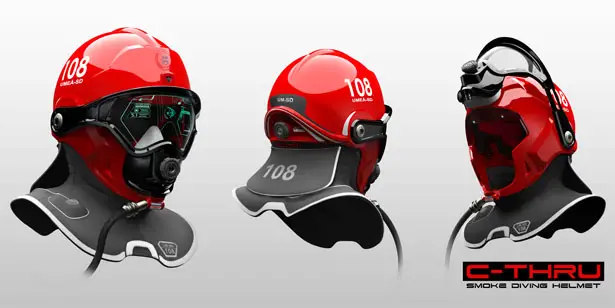
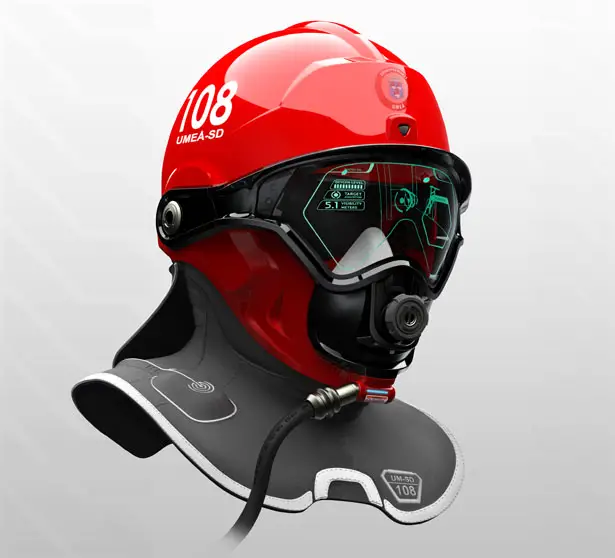
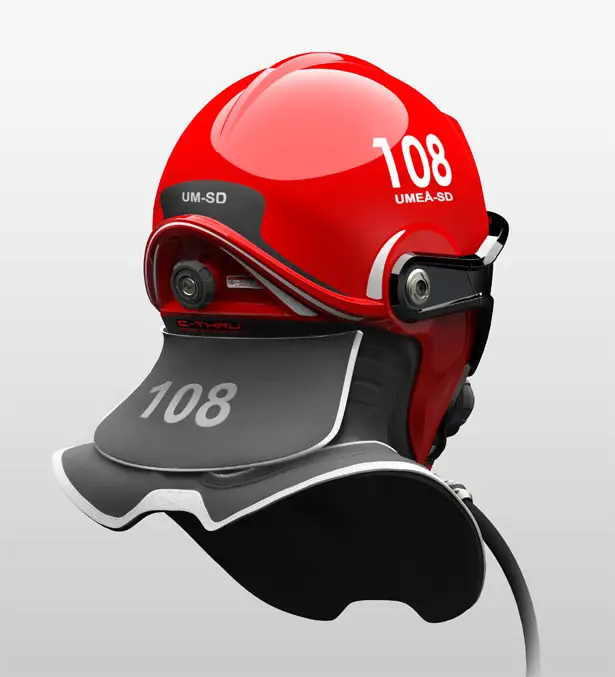
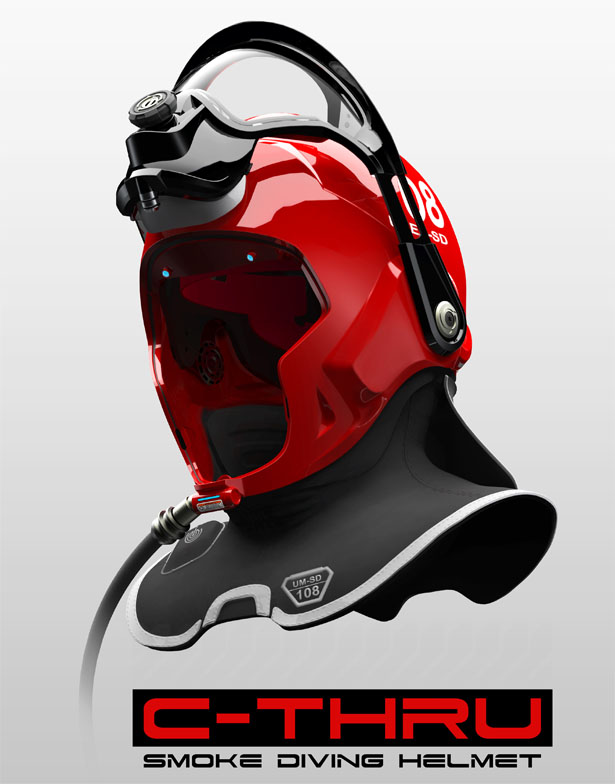
C-Thru Smoke Diving Helmet : Future Vision of Fire Fighting Equipment by Omer Haciomeroglu

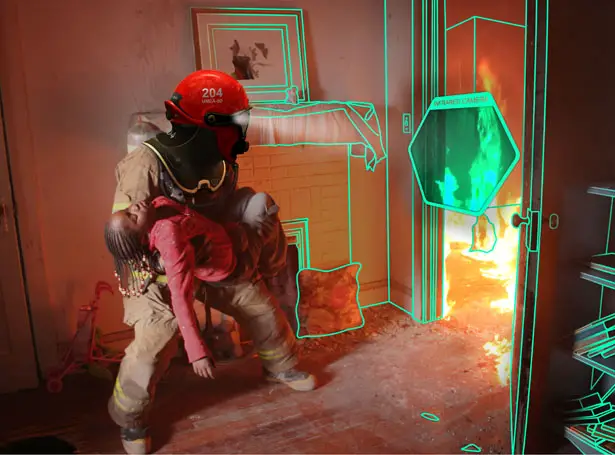
C-Thru Smoke Diving Helmet helps firefighters to see clearly in smoke-filled buildings to do rescue missions. Using their traditional firefighting equipment, they have to keep hand contact with walls or crawl on the ground while carrying heavy air support and hand held equipment, this can slow down the rescue process.
This helmet provides a wire frame vision of the interior geometry, in this way, firefighters can identify their surroundings easily and searching for victims can be done more accurately. C-Thru Smoke Diving Helmetsimplifies many layers of heat and impact protection into a simpler protection package to ease the movements.
Designer : Omer Haciomeroglu
C-Thru Smoke Diving Helmet by Omer Haciomeroglu
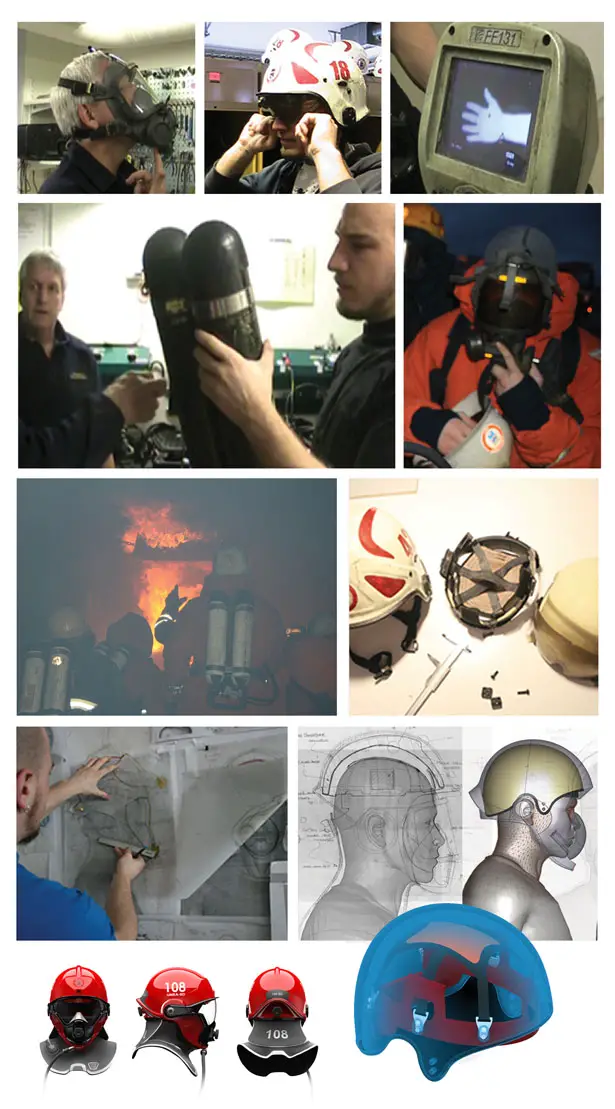
The main goal of this project was to develop an accurate way for C-Thru Smoke Diving Helmet user to see and move around in heavy smoke environment without the need of carrying extra equipments. This product has to be able to simplify many layered heat protection into one single unit as well as provides communication equipment among other rescuers. It would be easier for firefighters to wear C-Thru on their way to the fire scene. Just in case you didn’t realize, firefighters have to get dressed within 90 seconds otherwise they are left behind. So, these heroes are often wear many inaccurate and uncomfortableequipments in order to rush to rescue you. It can be very challenging to put protective inner hood, full facegas mask, heat insulated helmet, outer hood, thermal imaging device and audio communication device in only 90 seconds.
C-Thru Smoke Diving Helmet could be the future vision of fire fighting equipment. Instead of using hand written map and verbal information, fire fighters can use this helmet to navigate in and out the building. They don’t have to crawl on the ground or keep hands on the wall to find victims, simply walk or run towards the victims.

C-Thru Smoke Diving Helmet by Omer Haciomeroglu
A burning building is a noisy place. Firefighters like to listen the sounds for they can provide an early warning of a collapsing sealing or a doorway. But those loud fire sounds also interfere with the communication sounds with the smoke diver leader and the team mates. C-Thru selective noise cancels the surrounding sounds and only enhances victim and pre-set cracking sounds providing a more clear communication.
With C-Thru Smoke Diving Helmet, firefighter leader doesn’t have to do guess work and fill any after reports. Everything is being recorded simultaneously. This provides improvements for the future rescue missions and better evaluation and a step towards preventing future fire accidents.
C-Thru Smoke Diving Helmet by Omer Haciomeroglu

Palo de amasar, masas editables.


Pizzas con buena forma.

Aluminio y coco.


Y como el re-uso de cascaras puede ser muy útil.


nutshells-01.jpg
nutshells-02.jpg
I was excited when I first learned that crushed walnut shells could be used as blast media, to strip the paint or carbon deposits off of metal parts placed inside of a blast cabinet. I know sand is readily available, but I like the idea of something like nutshells, which ordinarily go straight into the trash, fulfulling one last useful function before taking up space in the landfill.
I've since been hard-pressed to find other uses for discarded nutshells that didn't involve making disturbingly feral-looking jewelry. But Indonesia-based product designer Arfi'an Fuadi and business partner Elonda Blount have figured out how to machine coconut shells into little rings, which they integrate into the bodies of their CoCoPen aluminum pen housings.
nutshells-03.jpg
While it's just a small and admittedly cosmetic step towards finding practical uses for coconut shells, the duo's pens have proved popular; they swiftly received Kickstarter funding to produce their first run of 100 pens (the maximum amount Fuadi's facility in Indonesia can currently handle), but as they've doubled their funding target with nearly a month left, they'll presumably continue producing them.
nutshells-04.jpg
I'm very curious to see what their machining process is, as a coconut shell shard doesn't exactly lend itself to being lathed or CNC milled; I can't imagine how they clamp the thing. But I hope Fuadi and Blount continue monkeying with the stuff, as I'd love to see if they can come up with a practical application for the material with mass-manufacturing implications.

11/4/13

Ruedas de bicicleta.

herramientas biodegradables.


Shovel.jpg
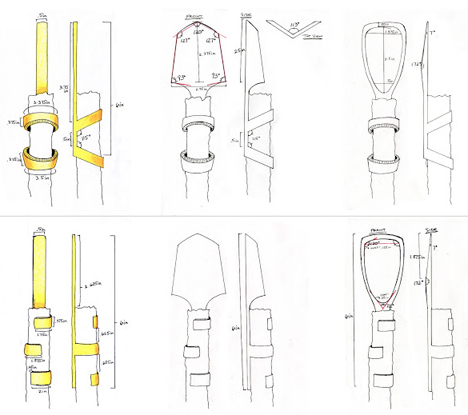
In design school these days, we've gone so far around the 'sustainability' bend that it seems like the word might have lost meaning all together. That's why whenever we see unique take on the cradle-to-cradle conversation; it's a breath of fresh air. The most recent addition to the canon of sustainable design comes from the University of Michigan'sHannah Dow, in her senior BFA thesis project cleverly entitled, Temp Tools.
I created Temp Tools aiming to stir up the conversation about the complete life cycle of objects; Thinking about where our items go once they leave our house in a garbage bag. I hope that with Temp Tools, I can get people thinking about other things they own that could be designed in a similar way as the tools, with sustainability in mind.
temptoolsgroup.jpg
Hannah has been developing the tool line, consisting of a skewer to roast marshmallows or hotdogs, a spatula, and a shovel for nearly 8 months. Each tool in the line can be fitted to a stick to be used as a makeshift handle and will fully degrade in nature leaving only flower seeds in its wake. While sustainable design will never embrace the 'hey, just toss it out' mentality, maybe we can still do a little guilt-free littering with our Temp Tools.
We asked Hannah to share with us some insights into both the material exploration and product development leading to Temp Tools:
Core77: How did you develop a composite material strong enough to create a durable 'temp tool'?
Hannah Dow: The material the tools are made of is what comprised my first four months of the project. After trying to find a man-made, biodegradable, strong material that I could purchase and coming up empty-handed, I realized I needed to do my best at making whatever it was that I wasn't getting elsewhere. The composite material has is completely natural and biodegradable after use and strong and rigid during its role as a tool. If put into production the tools would be made using a 3-4 part mold seeing that the material is a kind of liquid wood mixture.
sketchtemp.jpg
TempDraw.jpg
Core77: Where does the life cycle of the tool end?
Providing a fool proof method for disposal (you essentially drop the tool on the ground and forget about it), the user will get into the habit of giving back, hopefully relaying the idea that the afterlives of our objects should be something more highly considered in the world of design and consumption.
temptoolsoutdoor.jpg
Core77: What are the temp tools constructed out of?
The composite material is constructed from a gelatin-based glue and sawdust, essentially creating a liquid wood material. The composite is completely natural and biodegradable after use, as well as strong and rigid when used. [Because the composite] houses a specific species of regional flower seeds, this product addresses the problem of invasive species and explores the relationship between consumer and product; how one can establish a connection with an object even after its use is fulfilled and it has been discarded. With these tools, people will be able to actually leave their site in better condition then when they arrived. The consumer uses the tool to thrive in and manipulate different aspects of the land and then repairs it by planting the tools and promoting the growth of a new life form.
Toolgroup2.jpg
temptoolinfo.jpg
We appreciate the 'if you cant beat them, join them' take on consumer culture and her killer process sketches (a lesson for all you ID students out there). Hannah will be graduating from the University of Michigan in May and we wish her the best as she joins the design workforce.

La electrónica puede ser más fácil.


Brought to Life by littleBits from Labour on Vimeo.

vía: http://www.core77.com/blog/default.asp?p=2

27/3/13

Una muy buena idea!


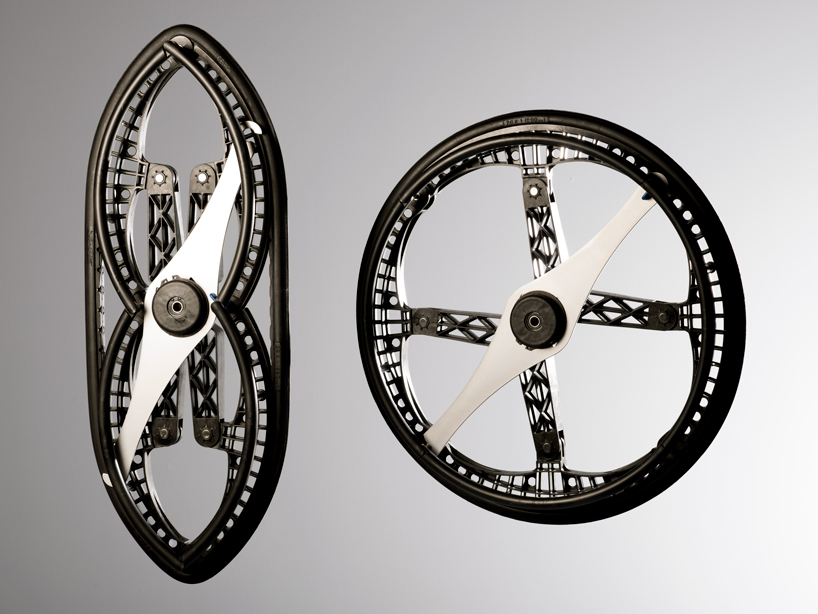
designs of the year 2013: morph folding wheel by vitamins design
original content
designs of the year 2013: morph folding wheel by vitamins design
first image
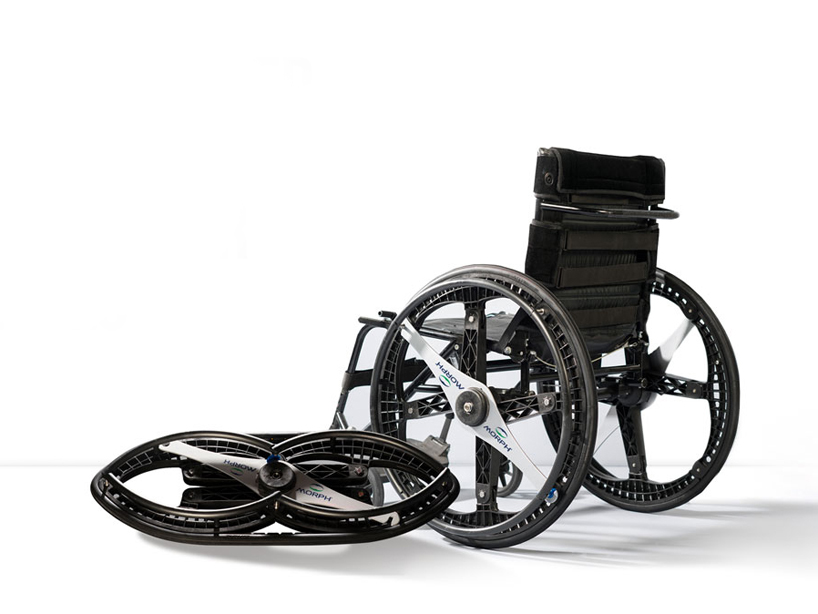
the world's first folding wheelchair wheel by vitamins design


london-based vitamins design studio (duncan fitzsimmons, clara gaggero and adrian westaway) works between the areas of science,
technology and business. their 'folding wheel' invention has been included in the london design museum's 'designs of the year 2013' shortlist
(see the full listing of nominations on designboom here), and is being presented in an accompanying exhibition at the institution until july 7th, 2013.

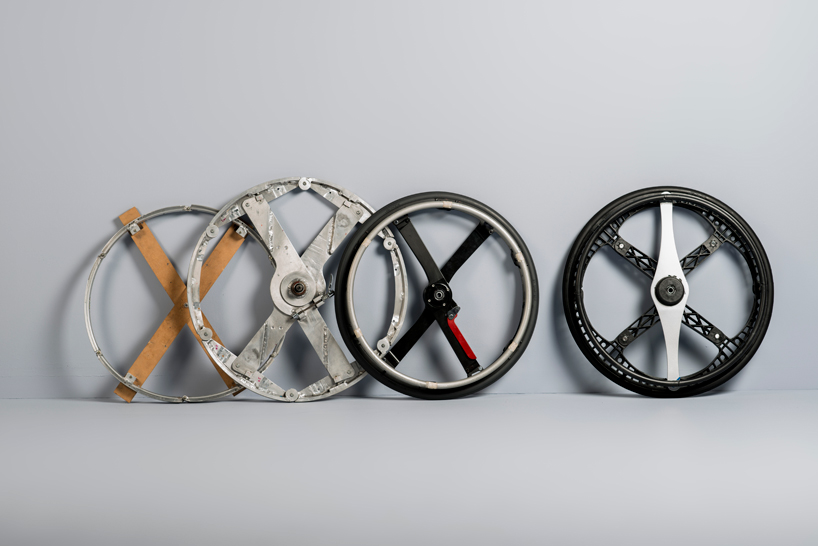
the project was originally conceived as a bicycle wheel by fitzsimmons during his studies at the royal college of art in london.
however, gaining much attention for the concept he began receiving a lot of feedback about its possible applications -
primarily that it would be ideally suited for wheelchairs. so, with the help of maddak inc. - a company who specializes in home healthcare
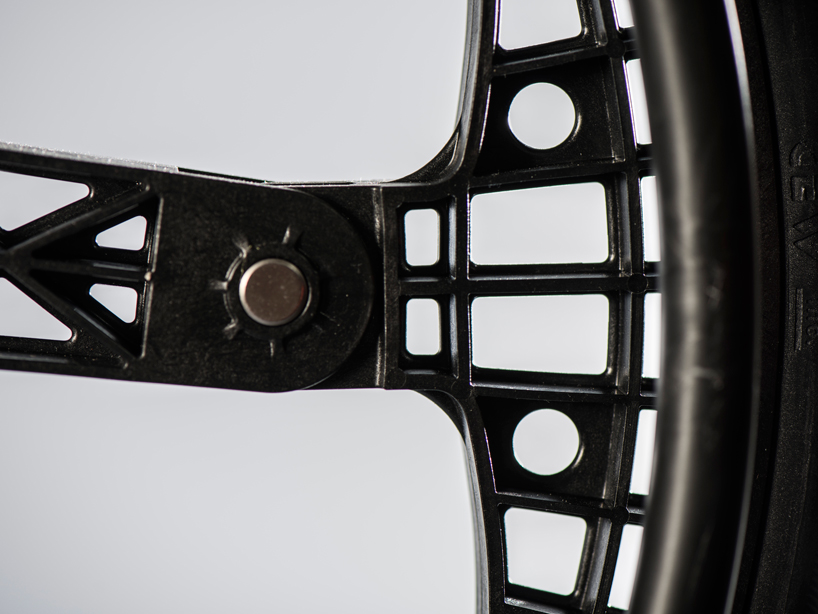
and rehabilitation products for seniors or individuals with disabilities - the vitamins design team has further developed it into 'morph',
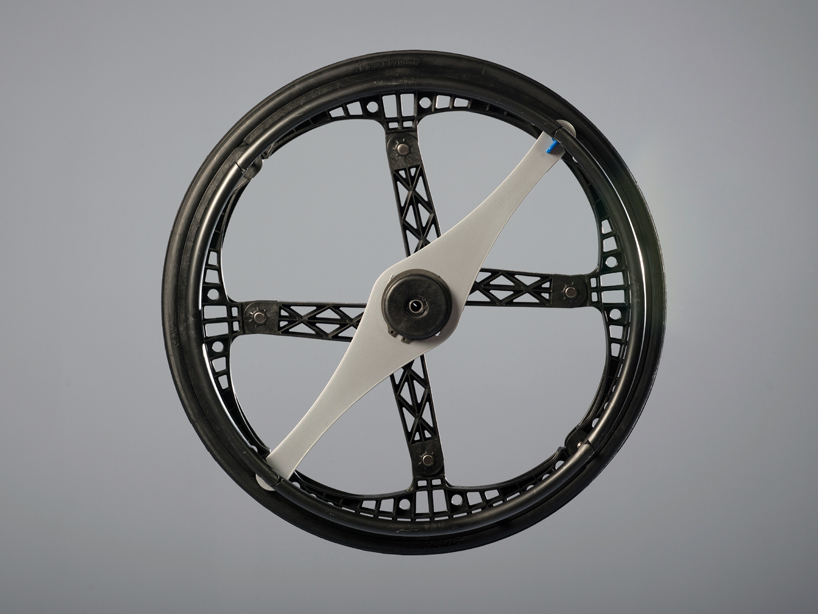
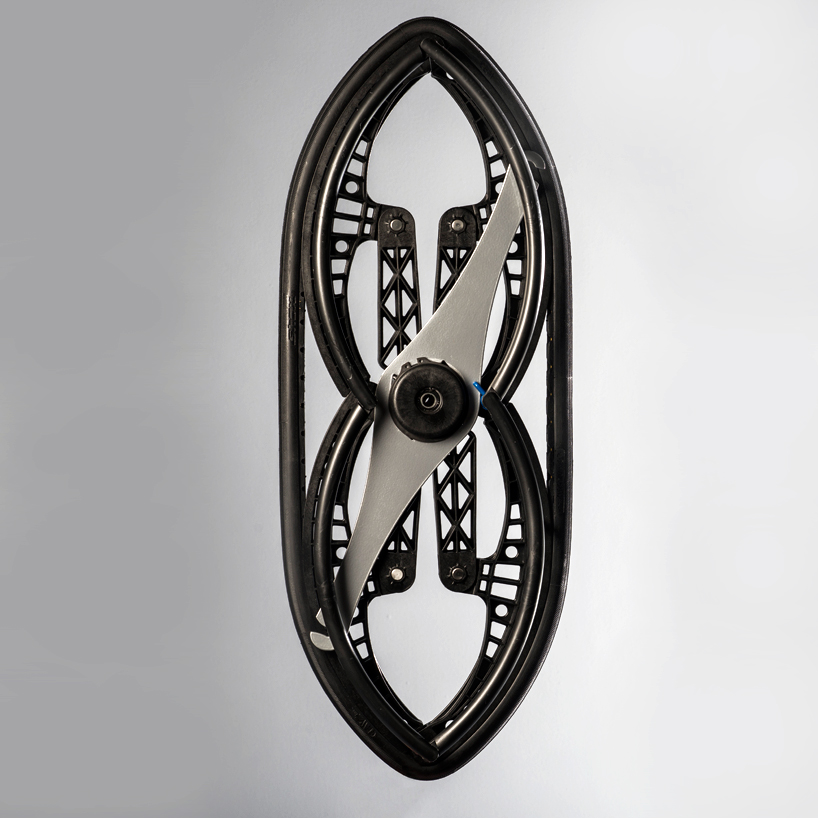
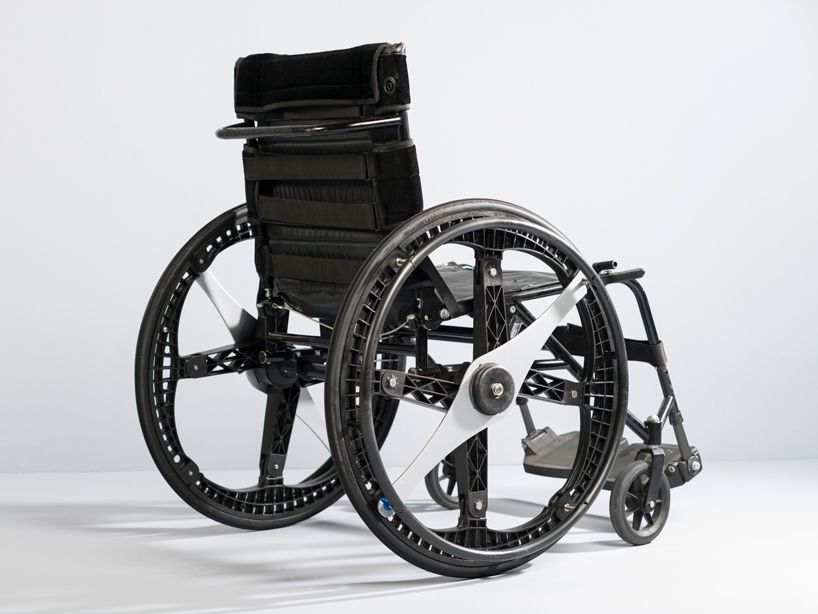
the world's first foldable wheelchair wheel available on the market for purchase. having the ability of being collapsed makes it easy for one to transport
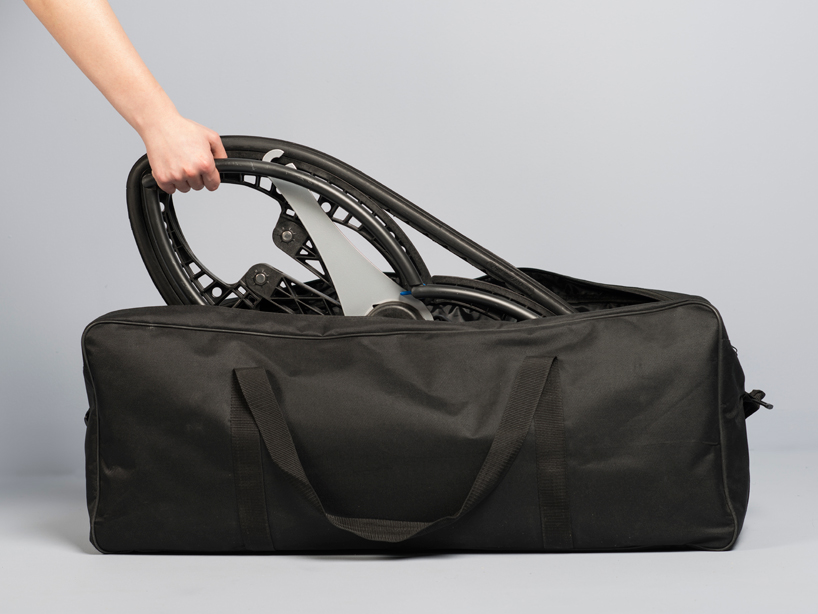
and store a set of four during travel, such as in the overhead locker on an airplane, or trunk of a small car as a result of the wheels taking a smaller,
more convenient shape-- in their open, functioning state each wheel measures 24" in diameter, folding down to a compact 32" x 12,5" when not in use;
weighing only 7.5 lbs a piece and made from glass filled nylon with a polypropylene hand rim.


the morph folding wheel measures 24" in diameter


in its folded state its dimensions measure 32" x 12,5"


detail


wheelchair installment


when folded, the wheels's compact size makes it easy to transport and store


prototypes

 
the design is patented and produced by US medical supplies manufacturer maddak inc., as the 'morph folding wheel'


the open possibilities of the morph folding wheel
video courtesy of maddak inc.


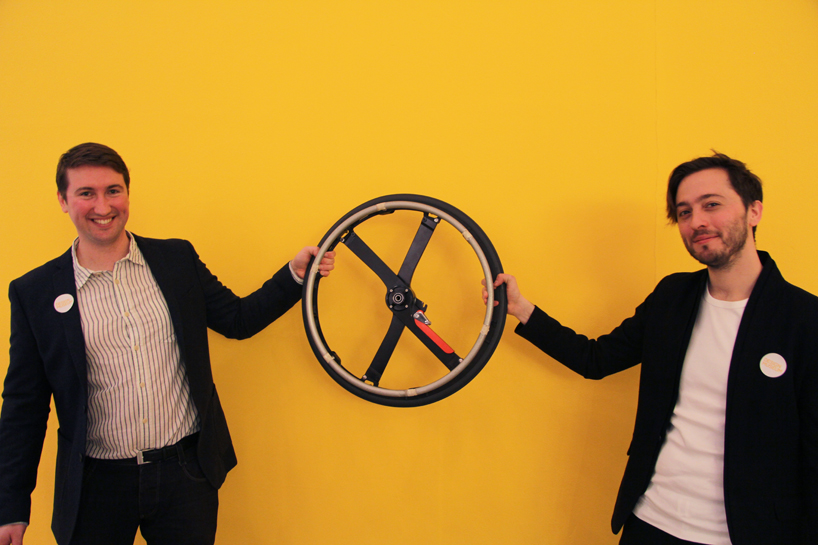
duncan fitzsimmons (left) and adrian westaway (right) of vitamins design at the opening of the 'designs of the year 2013' exhibition
image © designboom


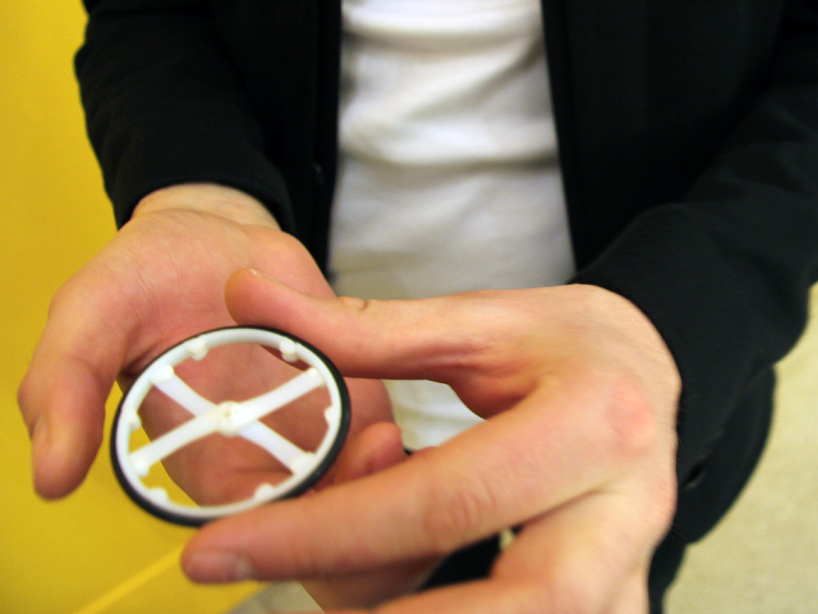
adrian westaway of vitamins design showing a small model of the folding wheel open...
image © designboom


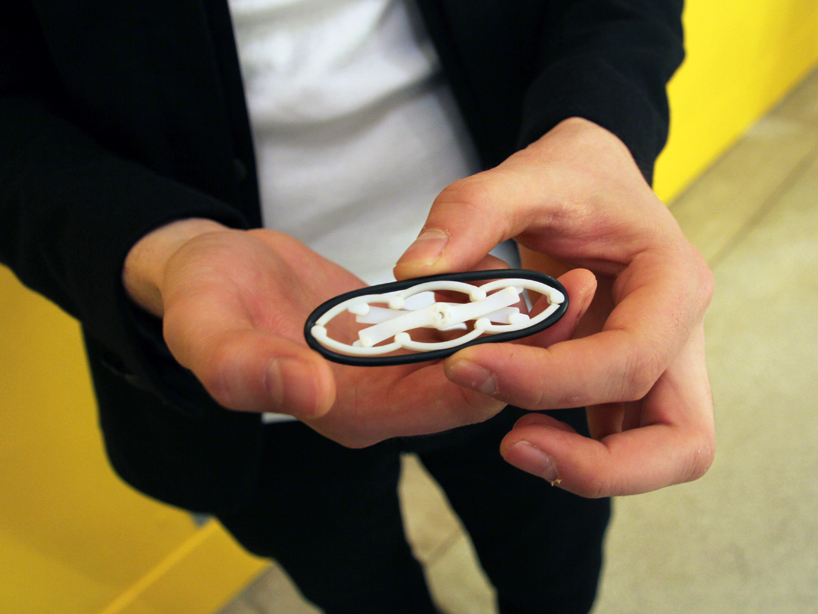
and collapsed.
image © designboom